Like a Business

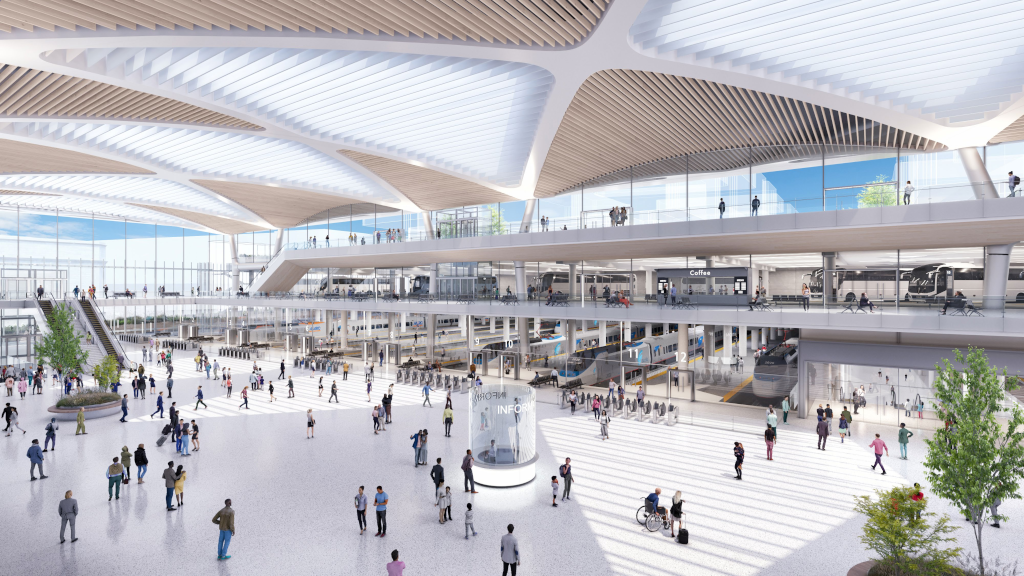
The purpose of the Project is to expand and modernize Washington Union Station, the National Capital Region’s principal intermodal transportation hub.
– Federal Railroad Administration 2022
… (Pssssttt ... It ain't gunna happen.)
We were looking to head North. by train, to the von Trapp Family Lodge and Resort in Vermont for a few days of cross-country skiing. At the moment, though, we were cooling our heels in Union Station waiting for the Vermonter, our train, to wake up, get out of bed, and connect to the overhead electric lines that would power us as far as New Haven, Connecticut. Diesel would have to do the rest.
Not all progress, it turns out, tends toward worse.
The glass enclosed "Ticketed Passenger Seating" area was something of an improvement over the haphazard string of benches in the Vast Emptiness of old Union Station. In years past, having secured a bench near the forbidden entrance area labeled "K" – the magic boarding gate for the Vermonter last time – one needed to periodically ask someone to guard your spot while you went back up to the Schedule Board to check for updates on the status of your train.
Inevitably, the Vermonter would end up being assigned a letter of the alphabet far away from "K," or far away from wherever you might currently be seated. That revelation then entailed gathering up all your belongs, hoisting the over-stuffed backpack, and rushing down the Vast Emptiness towards "D" – or whatever the new assignment might be – all the while working against the flow of the passengers coming from "D" and headed towards boarding at "K."
Not any more. In today's iteration of Union Station, we merely had to wait in the glass-enclosed "Ticketed Passenger Seating" cell block until the nice Amtrak lady at the front desk announced, over the loud speaker, the letter of the alphabet newly associated with our particular train. We bought a couple of coffees from "Pret" and settled in to wait, scanning the tiny microcomputer screens of our cell phones, and wondering what the roll of the dice would bring. This time, the Vermonter came up "C," a gate just back down past "Hudson News."
"Good morning, Ladies and Gentlemen. This is the first call for those of you traveling on the Vermonter – the Vermonter – to St. Albans, with intermediate stops at New Carrollton, Baltimore, Wilmington, Philadelphia, and New York's Penn Station. At this time, please check on your belongings and make your way to boarding Gate C – boarding Gate C. Once again, for those passengers traveling on the Vermonter, please proceed to boarding Gate C."
We gathered up our luggage, hoisted the over-filled backpack again, and headed out the door. As we left the "Ticketed Passenger Seating" enclosure, our hostess wished us safe travels and hoped to see us again soon. "Thanks for choosing Amtrak," she said. Though she was programmed to repeat those phrases for every train departure ad infinitum, I do believe she really meant it that time.
Soon we made the trek over to Gate C and joined the line of passengers solving the maze of crowd-control barriers. Right on time, the uniformed Amtrak employee opened the doors to forbidden entrance C and the rush to the train began.
For a moment I stopped to look back over my shoulder at the Vast Emptiness one last time before heading to track 15 and the Vermonter. But something was terribly wrong, and I caught my breath. For a second, just a brief second, I faced the vision of the Vast Emptiness filled from wall to wall with human beings. Human beings I didn't know, heads shaved, all standing in prison jumpsuits. Not 2,200. Not 3,472. Not 10,000 but millions. As far as my eyes could see.
Friday evening, February 6, 2026 – just 36 hours before we headed to Vermont – a three judge panel of the United States Court of Appeals for the 5th District ruled 2-to-1 in favor of concentration camps. The decision found for the Trump regime, permitting the continued detention of potentially millions of immigrants indefinitely without bond, without habeas. The two judges in the majority are Edith H. Jones, appointed by President Reagan, and Kyle Duncan, appointed by Trump.
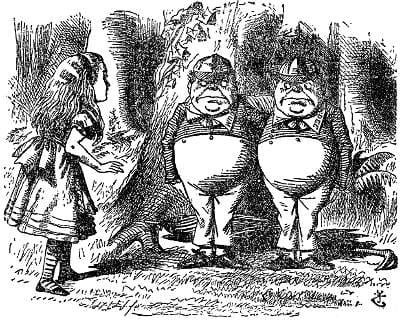
The decision obliterates the traditional legal distinction between immigrants seeking admission at ports of entry, and longer term immigrant residents in the interior of the country. For the last 3 decades, the courts have ruled that immigrants crossing the border may be detained without bond and deported, but those already here are eligible for release on bond and afforded due process. Jones and Duncan declared Tweedledum and Tweedledee, sending both classes off to detention concentration camps without bond.
The lone dissent by Judge Dana M. Douglas, appointed by President Biden, notes:
The Congress that passed IIRIRA would be surprised to learn it had also required the detention without bond of two million people. For almost thirty years there was no sign anyone thought it had done so, and nothing in the congressional record or the history of the statute’s enforcement suggests that it did. Nonetheless, the government today asserts the authority and mandate to detain millions of noncitizens in the interior, some of them present here for decades, on the same terms as if they were apprehended at the border.
I have tried to parse the majority decision, which devolves into convoluted semantic arguments over the terms "applicant for admission" and "alien seeking admission" and the relevance of Section 1225 versus Section 1226 of the statute. Yada yada yada. David French, writing in The New York Times, can take you through the nitty gritty here. My layman's interpretation? The court majority is practicing Legal Weasel Word-Smithing. Judge Douglas puts it this way:
The majority stakes the largest detention initiative in American history on the possibility that “seeking admission” is like being an “applicant for admission,” in a statute that has never been applied in this way, based on little more than an apparent conviction that Congress must have wanted these noncitizens detained—some of them the spouses, mothers, fathers, and grandparents of American citizens. Straining at a gnat, the majority swallows a camel. I dissent.
I concur with the Douglas dissent.
“We need to get better at treating this like a business,” Acting ICE Director Todd Lyons said, explaining he wants to see a deportation process “like (Amazon) Prime, but with human beings.”
– AZMirror
Like Amazon Prime, but with human beings.
As of mid-January, 2026, ICE held more than 75,000 immigrants in detention centers across the country. That, they assure us, is not nearly enough. American blood and soil demands much more.
Presto! Behold, the new "ICE Detention Reengineering Initiative!" Under this plan ICE will spend $38.3 billion to expand their detention capacity to 92,600 beds. You are going to need all your fingers and toes for this one: At $38.3 billion for an additional 17,600 beds, that's only just a little over $2.1 million per bed. What a sleep number!
ICE already maintains 10 "turnkey" facilities for immigrant detention. The "ICE Detention Reengineering Initiative" calls for 8 additional large scale detention centers holding from 7,000 to 10,000 prisoners each. To provide a supply of immigrants for these "detention centers," ICE is adding 16 "processing sites" projected to hold a daily population of 1,000 to 1,500 immigrants. Each.
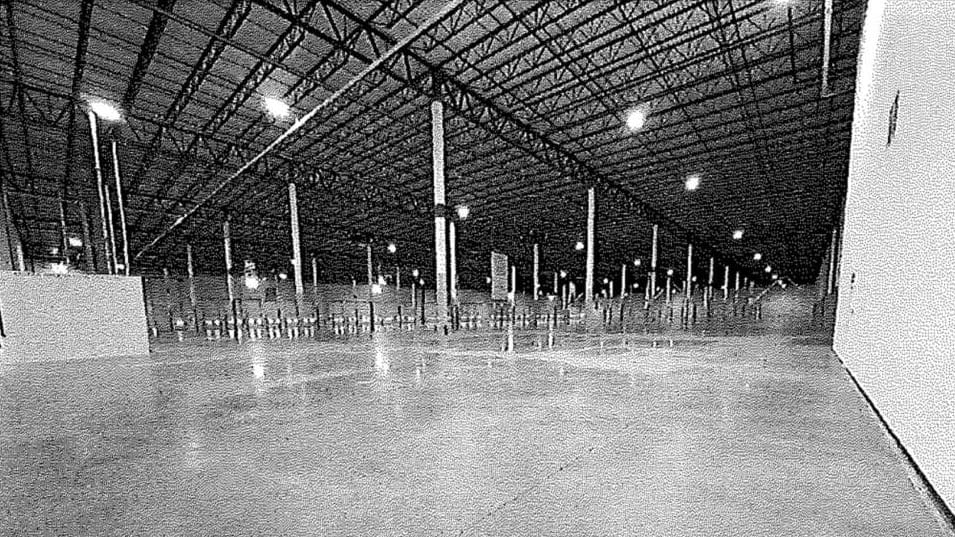
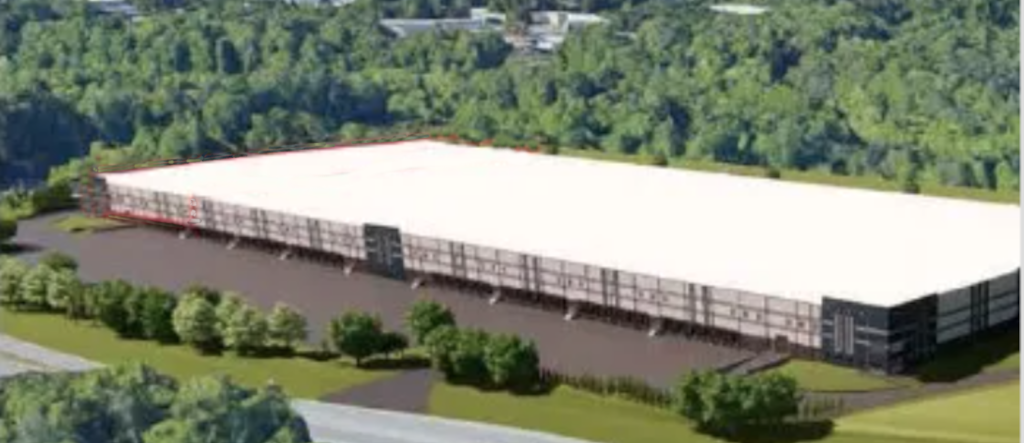
To meet its goals, ICE is quietly buying up unused industrial warehouses across the country and contracting to have them reengineered as human warehouses. Likely, they will be missing the amenities of the Union Station Metropolitan Lounge. But word gets out. The image above shows a 553,000 sq ft warehouse in Hanover county, Virginia, that ICE notified the county it intended to buy. The deal fell through when the owner, Jim Patterson Development, of Vancouver, Canada, canceled the sale following public protest in both the U.S. and Canada.
The truth is, though, many of these Reengineering leases are already a done deal.
A little context, just for fun:
With 92,600 beds, ICE could incarcerate the entire population of my town of Charlottesville two times over, with room to spare. It could detain the entire foreign-born population of Miami or, alternatively, over a quarter of its Hispanic and Latino population. Again, with room to spare.
With 92,600 beds, ICE could lock up everyone who attended the Super Bowl in 2026, plus nearly the entire populations of Palm Beach, California, Bar Harbor, Maine, and Park City, Utah. Combined.
The "Supplemental Nutrition Assistance Program" (SNAP), formerly known as "Food Stamps," provides food assistance to low income families. The entire cost of SNAP in 2025 was roughly $102 billion. The cost of the "ICE Detention Reengineering Initiative" would cover over 37% of those SNAP benefits.
In 2025, the Republican Congress passed what it calls, without gagging, the "One Big Beautiful Bill" bill(?). That bill slashes federal SNAP coverage by 15% beginning in 2028. The cost of the "ICE Detention Reengineering Initiative" would cover that short-fall more than twice over. And still be left with $7.7 billion in change. Enough loose change for over 150,000 Cava bags of bribes slipped over the counter to Border Czar Tom Homan.
Let's imagine you wanted to carry around ICE's $38.3 billion. In one-dollar bills that's over 42 thousand tons of money. In $1,000 bills that's still 42 tons, the capacity of about five or six big old gravel trucks.
If you put 38.3 billion one-dollar bills end-to-end they would reach to the Moon and back 7 times, with more than enough left over to get back to the Moon an eighth time. Which is 8 more times than has been achieved in over 53 years – not since Apollo 17 in December of 1972.
If you put 38.3 billion one-dollar bills end-to-end they would wrap around the Earth 148 times. After that, you would have enough dollar bills left over to line the route, round trip, from the von Trapp Family Lodge to Mar-a-Lago and back 5 times. And even then, you would have enough left over to go back to Mar-a-Lago a sixth time.
But I recommend that you don't.
Go North on the Vermonter instead.
It was a short walk to track 15, made to seem longer only by the extended perspective of the platform. A few steps up corrugated metal stairs, which mysteriously unfold down from the guts of the carriage, and we were headed to our seats.
The Vermonter, train 56 going North, originates in Washington Union Station and thus, as we entered, it starts off the day rather thin. Which was a good thing because, at this point, I was still a little uncertain about what was real and what was really fifth dimension. Once on the go, the Vermonter gradually expands, as the Sun rises higher in the sky, until it reaches full bloat in New York City. Then it slowly thins out again, finally sliding into St. Albans, its old self, and ready for a night of dreaming.
No sooner had we settled, than the string of trains standing at platforms on both sides of us began a simultaneous, synchronized rush backwards into the Vast Emptiness behind. An occasional click joined a syncopated clack, gained frequency and thus began to recreate the ancient rhythmic beat of the railroad. We were on our way.
While not all progress tends toward worse, it turns out, some things remain pretty much the same.
There were, once, paper tickets. The dimensions varied, but Amtrak tickets were a bit bigger than a present-day honking Premium Super-Pro model 17 cell phone. That is, they didn't fit in a pocket, or anywhere else useful for that matter. Paper tickets were adorned with all sorts of mystic information and late stage tickets even boasted a barcode showing the arrangement of Stonehenge.
Muffled static over the intercom would order you to have your ticket ready because the conductor was coming through the cars to collect them. Unfortunately, the conductor didn't immediately instantiate beside your seat and, consequently, the upcoming mandatory validation was quickly forgotten. And so your ticket got stuck as a bookmark in a paperback, stored away in an inside jacket hide-a-way, sat on, or accidentally brushed onto the floor.
Eventually, the conductor would show up. From behind. Conductors are trained to slink directly to the back of the car first, and then work forward, the better to catch passengers by surprise. Then would ensue, row by row, people frantically hunting high and low for their misplaced ticket, driven by the fear of being thrown off the train as it crossed the Susquehanna River near Havre de Grace.
Today we are all digital. Our tickets float as PDF files in the ether, lodging tenuously as ghosts within our cell phones. When the muffled static came over the intercom, I immediately opened our ticket in one of the 27 different PDF reader apps that my cell phone provider was paid to pre-install on the device, in and among the various other apps advertising boxer shorts from Duluth Trading. I went back to deleting unsolicited email.
"Ticket!"
Holy shit! Where's my ticket? Say, this guy is good. He came up from behind without warning and now loomed over my left shoulder.
"Uhmm ... it's here on my phone. Ah, sorry. Just a minute ..."
"You're supposed to have that out," he said, channeling his best imitation of the giant from Jack in the Bean Stalk.
I started madly swiping from stupid app to stupid app, trying to find the stupid PDF with the stupid Amtrak QR code that looked like a meme of the stupid measles, while all the time hearing the stupid theme song from stupid Jeopardy playing in the back of my head. We were fast coming up on Havre de Grace.
"Here it is." He scanned the code. "Sorry."
Mercifully saved from a cold extinction in the Susquehanna River, I slid deeper into the seat, trying to become as invisible as possible, and sorted through my options for the next 12 hours.
Maybe I should try working on my overdue newsletter for Xcentric Diffractions?
Yeah. That's the ticket.