Dancing With Entropy

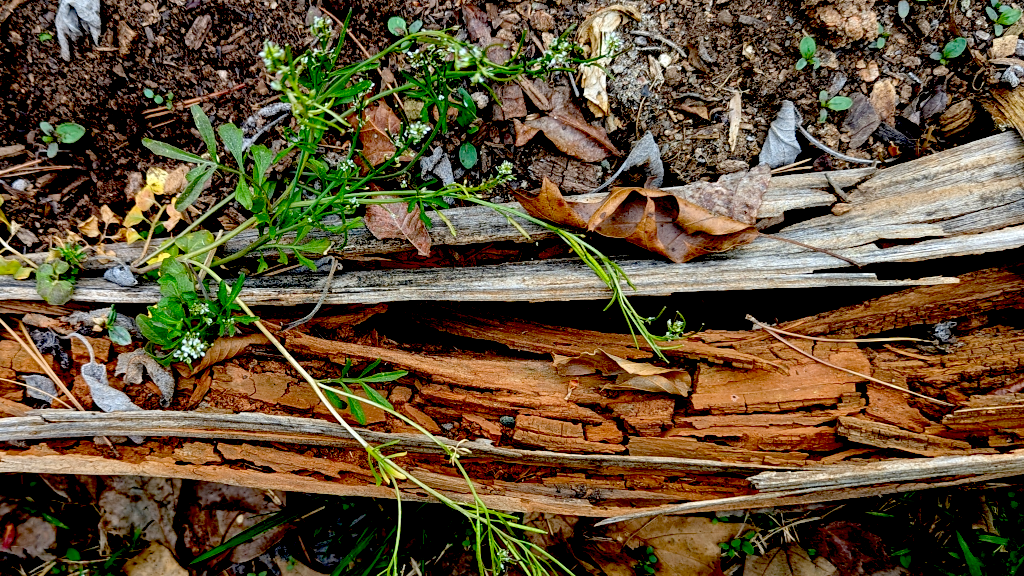
They remain acceptably useful for an acceptably useful length of time. About four or five years. By which time my once sturdy 2" x 10" pine boards, set to frame the garden, gradually decay away. Melting into the garden soil, brought low by warmth, water, dirt, and microbes that feed on wood for a living, agents of entropy harassing order into chaos. Dust to dust. A matter of time.
A goodly share of my garden has always been administered through the Office of Raised Beds. How and why – key tenants of proper reportage -- how and why a raised bed bureaucracy captured my personal garden husbandry is a mystery. But the when and where can both be assigned "At the Beginning."
As a little kid, I dutifully hoed our sandy backyard garden into raised beds, fine suburban sands descended from Lake Ontario, originally pulverized and dropped there by receding glaciers during some ice age or other. "Raised beds improve drainage," they say. Those sandy beds needed improved drainage like a colander needs more holes.
My Virginia garden is another story entirely. This here is brick-making country y'all. It is no coincidence that every single building Thomas Jefferson ever touched turned to brick. The ground is red brick clay. All the way down. A potter's paradise. Ground with the drainage of a crock-pot. Perhaps raised beds make sense in the Piedmont foothills of Virginia.
The thing is, I never tested the hypothesis. Resolved: that raised beds are the bees' knees of horticultural superiority. Actually, I never even formulated the hypothesis, let alone tried to test it. The scientist in me rebelled.
In a laboratory experiment you can control all the critical variables; at least all the ones you know about. But a backyard vegetable garden is a wild beast navigating a fantastic world. You will never hoe the same garden twice. Every year the garden is a different garden for a bazillion different reasons, and over a single human lifetime observations must be deemed largely anecdotal.
And so I just do raised beds, because that's what I do.
I discovered the blueprint for my current style of raised beds in a book called "Jeff Ball's 60-Minute Garden," written by the self-same Jeff Ball, and published by Rodale Press in 1985 (ISBN 0-87857-572-3). The cover sleeve shows a picture of a smiling Jeff Ball, holding a perfect red tomato, his arm stretched out across an over-flowing spread of every possible garden vegetable known to human kind. A wicker basket full of perfect yellow onions anchors the background. The sub-text of the book is "One Hour a Week Is All It Takes to Garden Successfully."
Now, some of you may be old enough to remember Rodale Press. (Rodale was bought by Hearst Crown Company in 2018 for a reported $225 million. And then dismembered. It is no more.) In its heyday, Rodale published the monthly magazine, "Organic Farming and Gardening." Started in 1942, this was the most popular gardening magazine of its time. And in addition to the magazine, Rodale specialized in publishing books on the environment, gardening, solar energy, homesteading, and post-hippie back-to-the-land instructionals. Good stuff, if I do say so. Al Gore's "An Inconvenient Truth" was published by Rodale in 2006 (ISBN 1-59486-567-1).
Now, given the sub-text click-bait, "One Hour a Week Is All It Takes … ," I probably would never have gone out of my way to purchase Bell's opus. If it sounds too good to be true, and all that. But in the mid 1980s, when I was first setting up my Virginia garden, I subscribed to Rodale's book club, and behold, one month Jeff Ball showed up in the mail with his perfect red tomato.
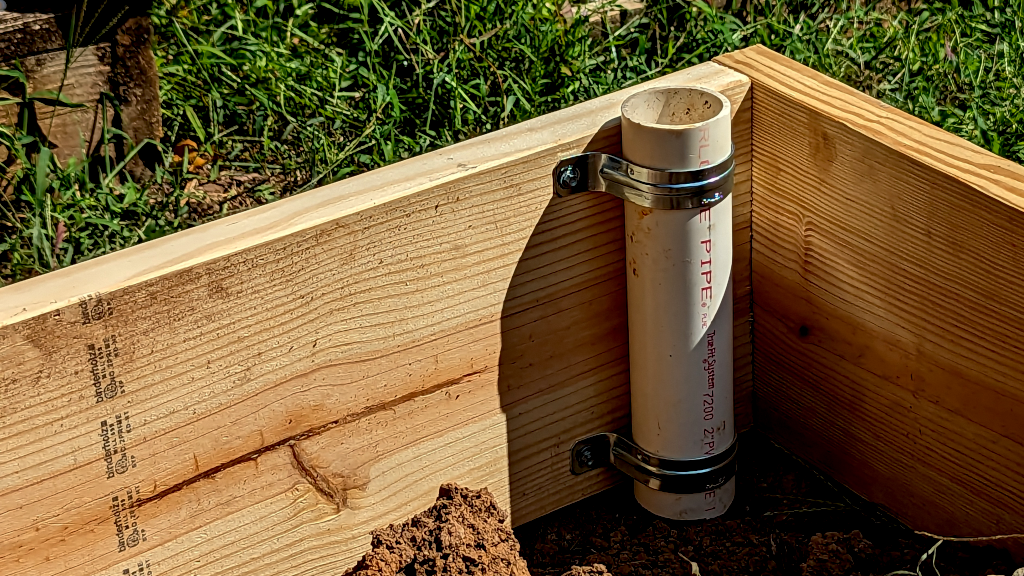
Ball's key insight was that raised bed frames could do more than simply contain the soil. By strapping cutoff sections of PVC pipe to the wooden frames, the lowly boxed bed could support low tunnels, trellis frames, and even electric wire fencing. All manner of useful accessories. Ball brought the enthusiasm of an engineer, a geek, to his garden book. Not the green thumb of the professional horticulturist, although he was that, but the BandAid thumb of the garage workshop handyman. He had me right there.
Jeff Ball passed away in 2011, but my garden is an ongoing affirmation of his legacy. That's how I've done my raised beds ever since.
On the surface, entropy is intuitively obvious. If you put a warm tea kettle in the freezer, it never goes on to boil. It only gets colder, marginally warming the nearby ice cream. Everybody knows that. But entropy is like the obnoxious house guest who knows no bounds. It is not content to mastermind tea kettles, but extends its influence into all of physics and metaphysics. Studied deeply, entropy becomes all gussied up in equations that only their mother could love.
Here's a summary crack at the second law of thermodynamics:
Matter and energy have the tendency to reach a state of uniformity or internal and external equilibrium, a state of maximum disorder (entropy). Real non-equilibrium processes always produce entropy, causing increased disorder in the universe, while idealized reversible processes produce no entropy and no process is known to exist that destroys entropy.
If you are playing the Prediction Markets, always bet on entropy.
Alas, the orderly molecules of my raised bed pine boards are destined to be parsed out, scattered, to their insect and microbe neighbors, dispersed to the soil, expelled as gases of metabolism to the atmosphere. Aiming for maximum disorder before I even put them in the ground.
Physicists have tried to outsmart entropy ever since it first granted them audience. Maxwell's Demon, for example, tried letting hot molecules go right and cold molecules go left, spontaneously heating one chamber of an imaginary tea kettle. Decreasing the entropy of the construct. It almost worked. But the book-keeping, as all book-keeping it seems, wasted energy. A waste (heat) that more than made up for the apparent decrease in entropy.
Entropy can be countered. We can rail against the impending cold, the fading of the light.
The tendency of a system to approach uniformity may be counteracted, and the system may become more ordered or complex, by the combination of two things, a work or exergy source and some form of instruction or intelligence.
That's me and my circular saw; at your service. A bearer of weak instruction or intelligence, building the frames and raised beds, subject to his own unrelenting entropy I'm afraid. The energy of construction, the magical exergy source, felt in sore muscles and joints, certainly for longer than is reasonable.
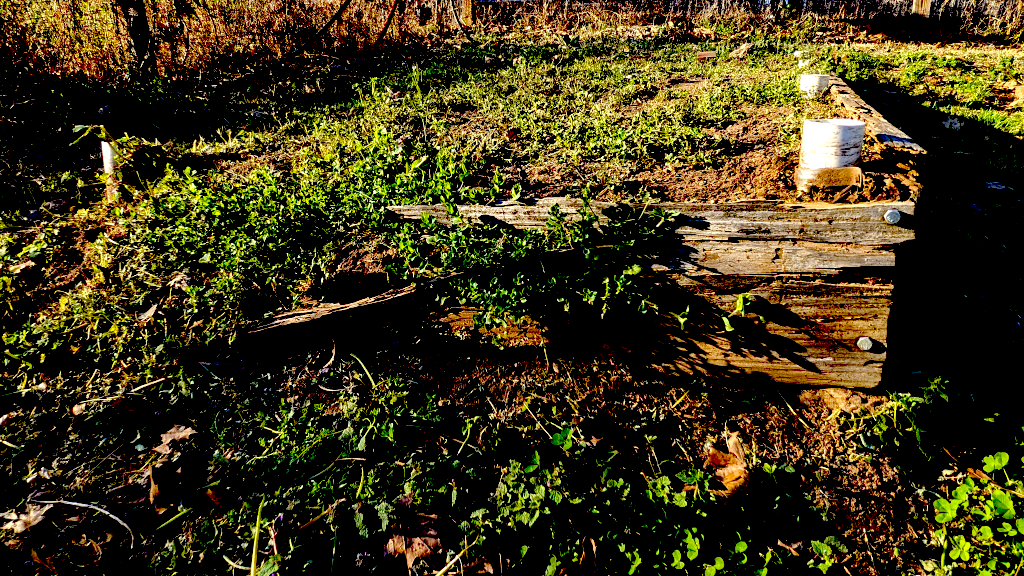
In the garden, entropy makes its own time. It's not like the beds suddenly disintegrate all at once, like the test flight of a dyspeptic SpaceX Starship. No, here there is a biology to it. The wood turns gray over time. Graying in a few years to what took me decades to accomplish.
Mosses take charge of the muse. And then one day, you put your hand on one of the side-boards, balancing to reach for a weed that set up shop somewhere towards the center of the bed, and the wood sags and splinters under your weight. The solid feel of reality collapses.
The bed can be coaxed along for another season, perhaps, but it is in hospice now and will need care to last till winter. No stressful trellis frames, no arguing with the hoe, the string trimmer. And the garden plan for next season will of necessity include the replacement of the infrastructure.
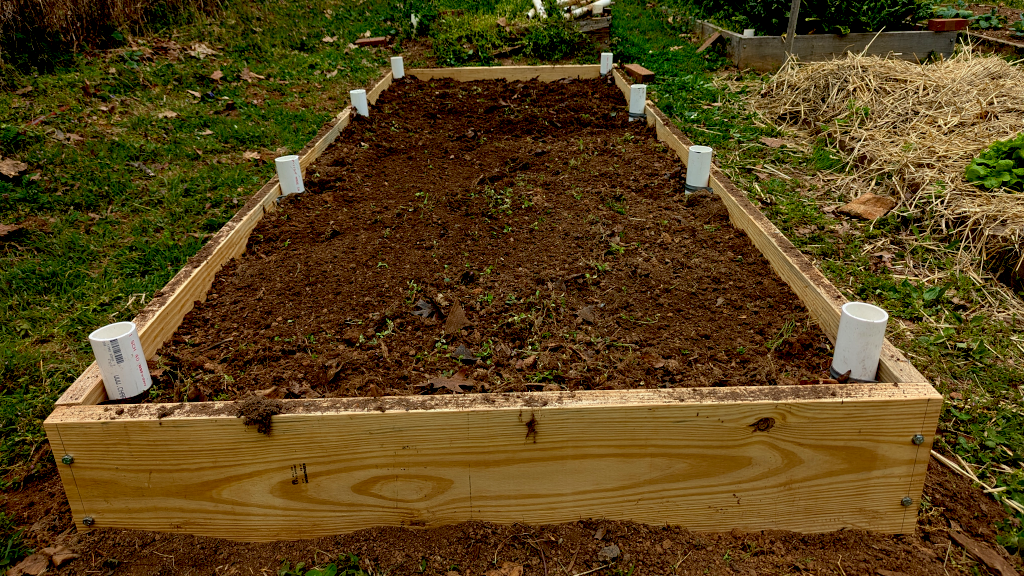
The old beds have to be dug up and retrenched for the new frames. I recycle the old PVC sections and pipe straps, parts that entropy hasn't forgotten but which it seems to regard with less energetic interest. The recycling saves a trip to the Big Box Store, and that in itself cheats entropy of a small victory.
The beds are constructed from 2" x 10" pine boards cut to make frames that are 10 feet long and four feet wide. I cut the boards to length, and pre-attach the PVC pipe sections while down at the workshop. Then exergy and I do the dosey doe bit with entropy, waltzing the boards up hill to the garden where they can be put together. All hail the lag bolt.
Over the years, the garden has grown to host 16 raised beds, which means I need to replace two or three of them every season.
In olden times, before the Age of Iraqi Weapons of Mass Destruction, I could put together a couple of beds in an afternoon. After the workshop prep, I just hoisted a couple of the 2" x 10" x 10' boards at a time and ran them up to the garden for assembly. One trip for each of the two beds, plus a third trip for the four end-boards, and it was practically finished.
But, now, I notice that I have grown gray, and sag in rather conspicuous places. I've finished one bed so far this year, over the course of a week, and a second bed is trenched and waiting for a frame. The solid feel of reality, while not exactly collapsed, demands extra scrutiny.
So, someday, the dance with entropy up the hill will step to its last chorus. The instruction, I trust, will still be there, but the exergy will no longer rush to punch in on the clock.
And so someday I will do that old experiment after all: the control garden without raised beds. Resolved: that raised beds are not the bees' knees of horticultural superiority; what truly matters is simply the love of the garden.